


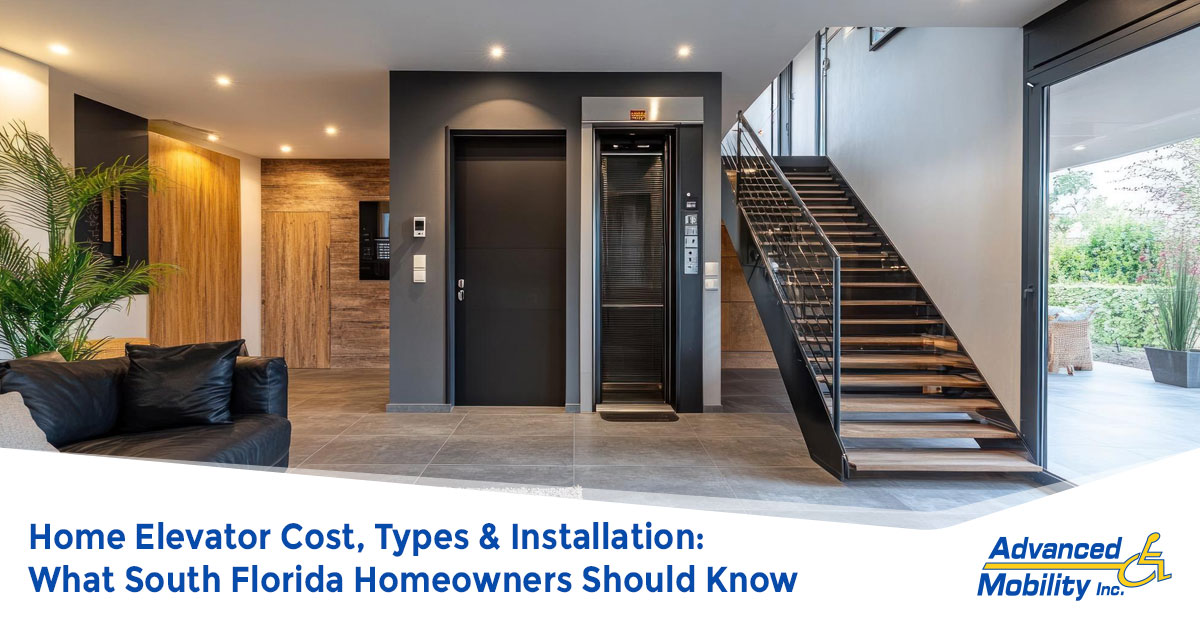
No longer only considered a luxury item, more and more homeowners throughout South Florida are exploring residential elevator solutions for both new construction and existing homes. Whether you are considering installing a home elevator to age in place or make the current home more accessible, one of the first questions that always comes to mind is the cost and what the elevator installation process involves.
Whether you own a two-story home in the suburbs or a waterfront property, a home elevator installation can make navigating multiple levels safer and more convenient for everyone. Understanding the variety of residential home elevator options and the costs involved will empower you to make the right decision for your unique home and budget.
What Determines Home Elevator Costs?
Home elevator installation costs very. The final investment is determined by several factors, including:
- The elevator type
- New construction vs an existing home
- The number of levels it will serve
- Structural modification requirements
- Custom features
The Elevator Type
The elevator type usually has the largest impact on the final cost. Traditional residential elevators generally require a shaft and extensive construction work, and through-floor lifts require less construction and are often a more affordable solution for existing homes.
New Construction Versus An Existing Home
Installing a residential elevator into a new construction is often easier and more cost-effective, as the elevator is included in the original plans. Installation into an existing home may require significant modifications to walls, floors, framing, or utility systems, and the complexity of the modifications influences the overall cost of the elevator.
The Number Of Levels It Will Serve
An elevator serving only two levels requires less equipment and installation time than one serving three or more levels. When an elevator serves more than two levels, increased equipment requirements and installation complexity add to the final cost.
Structural Modification Requirements
Some homes may require structural changes to be made in order to accommodate the elevator. The amount of construction required can significantly affect the total cost.
Examples of structural changes that may impact the final cost include:
- Construction of An Elevator Shaft
- Floor opening
- Electrical modifications or upgrades
- Framing modifications
- Reinforcement considerations
Custom Features
Homeowners now have many more design choices than before. Home elevators can be custom built with upgrades influencing the final cost.
Popular upgrades available include:
- Specialty doors
- Smart user controls
- Premium wall and flooring
- Glass paneling
- Custom cab finishes
- Decorative lighting

The Difference Between Shaft And Shaftless Home Elevators
One of the most important decisions when it comes to residential home elevators is choosing between a traditional shaft elevator or a shaftless elevator system. Understanding the difference between the two helps to determine which option best fits your home, budget, and lifestyle.
Traditional Shaft Elevators
Traditional residential shaft elevators operate within a dedicated elevator shaft. Resembling elevators that are found in commercial buildings, these elevators are specifically designed for residential use and include:
- Larger cab sizes
- The ability to serve multiple floors
- Increased availability of customization options
- Strong resale appeal
When installing a traditional home elevator, a shaft must be built or incorporated into the home structure, so more equipment and construction work is required. Due to the increased construction and planning involved, the traditional residential elevator generally costs more than the shaftless model.
Popular traditional elevator models include the Savaria residential elevators. The Savaria models include the Savaria Duo and Savaria Trio. While providing the appearance and experience of a traditional elevator, they offer customization options that suit residential settings. The Savaria models also include elegant cabin designs with multiple finish options and smooth operation.
Shaftless Home Elevators
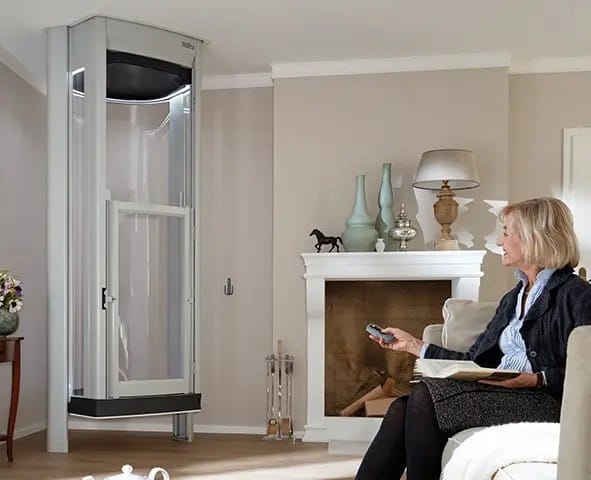
Shaftless home elevators can be installed into existing homes with minimal disruption, making them increasingly popular.
Unlike the traditional shaft elevator, the shaftless elevator travels through a cutout in the floor and does not require a traditional shaft. Offering a practical accessibility solution without major remodeling, the benefits of a shaftless home elevator include:
- Less construction and specialized equipment are required
- They are quicker to install
- They are ideal for existing homes
- They leave a smaller footprint
Stiltz home lifts are a very popular shaftless solution and, unlike traditional elevators, do not require an elevator shaft, machine room, or load-bearing walls.
Traveling on self-supporting rails and moving through a discrete opening in the floor, the Stiltz lifts are attractive for homeowners who want to add accessibility to an existing home without extensive construction.
The benefits of a Stiltz lift include:
- Quick installation
- Minimal construction requirements
- Flexible placement options
- Compact designs
- Quiet operations
- Energy efficiency.
Home Elevator Safety Features
Today’s residential elevators have numerous safety features designed to protect users.
These safety features include:
- Emergency battery backup that allows the elevator to continue operating and return safely to a landing during a power outage
- Safety sensors that detect obstruction and prevent doors from closing
- Emergency controls that include a stop function and communication systems
- Smooth start and stop technology that reduces sudden movement and creates a more comfortable ride
- Secure door systems that remain locked during travel and only open when the elevator reaches a designated landing.
How To Choose The Right Home Elevator
Choosing the right home elevator depends on various considerations. A consultation with a professional home elevator installer will help you choose the right elevator by addressing the following factors:
- Space availability – while some homeowners have ample space that can accommodate a traditional elevator shaft, others prefer a solution that fits into existing rooms and requires minimal construction and renovation.
- Mobility requirements – when choosing a home elevator, both current and future mobility requirements are taken into consideration. Examples of questions that need to be asked include:
- Will the elevator need to accommodate a wheelchair
- Is the elevator necessary for accessibility, or is it a mere convenience
- Is the homeowner’s long-term goal to age in place?
- The budget – every homeowner has a unique budget. By understanding the variety of options available, the homeowner can make a decision based on features, aesthetics, future requirements, and overall cost.
- Long-term plans – as an investment, a home elevator needs to take current goals and future long-term plans into consideration. Many South Florida homeowners install elevators not only because they need them today, but because they want to remain in their homes comfortably for many years to come.
- Will it be installed in an existing home or a new construction? Modern residential elevators are more flexible than older designs and can comfortably be installed into existing homes. Potential elevator locations in existing homes may include:
- Hallways
- Closets
- Stairwells
- Open floor spaces
- Living area corners

What Is The Home Elevator Installation Process?
The home elevator installation process begins long before the actual construction starts. Understanding the process can help homeowners feel confident about their choice.
The installation process involves:
The Initial Consultation
During the initial consultation, a conversation helps to identify the most suitable elevator options.
The discussion will include:
- Current and future accessibility goals
- Budget considerations
- The home layout
- Design preferences
The Home Assessment
A professional site visit is necessary to evaluate:
- The structural considerations
- The available space
- The construction requirements
- The electrical and other utility considerations
- The various placement options
The Design And Planning
Once an elevator has been selected, the detailed planning begins.
This phase includes:
- Taking measurements
- Obtaining the necessary drawings
- Obtaining the necessary permits
- Scheduling the construction
Construction Preparation
Depending on the elevator chosen, the preparation may involve:
- Opening flooring
- Modifying framing
- Modifying electrical wiring
- Constructing the shaft (if required)
Elevator Installation
This is the stage where the elevator equipment is installed and tested.
A professional installer will ensure the elevator:
- Is properly aligned
- Complies with all safety requirements
- Operates smoothly
Final Inspection And Training
After this final step, the project is complete.
The final step includes instruction on:
- Elevator operation
- Elevator safety features
- Elevator emergency procedures
- Maintenance recommendations
Professional Home Elevator Installation Is Essential
A home elevator is a highly specialized system requiring expert installation. An experienced professional will ensure the elevator is installed correctly and performs safely and reliably for many years to come.
A professional will:
- Conduct an accurate site assessment
- Adhere to the Florida building code elevator requirements
- Use the correct equipment, minimizing risk of injury or damage to property
- Ensure safe and manufacturer-approved installation practices
- Provide ongoing maintenance and support
Installing A Home Elevator With Advanced Mobility
A home elevator is a significant investment but one that delivers lasting value. With so many options available, understanding the difference between traditional and shaft elevators and knowing what factors influence cost makes the decision process much easier,
Whether you are considering a traditional home elevator or a shaftless solution, working with experienced professionals and understanding the installation process can help you move forward with confidence.
Elevate your home with comfort, convenience, and style. For all your home elevator needs, contact Advanced Mobility at 954-888-9292 today.