


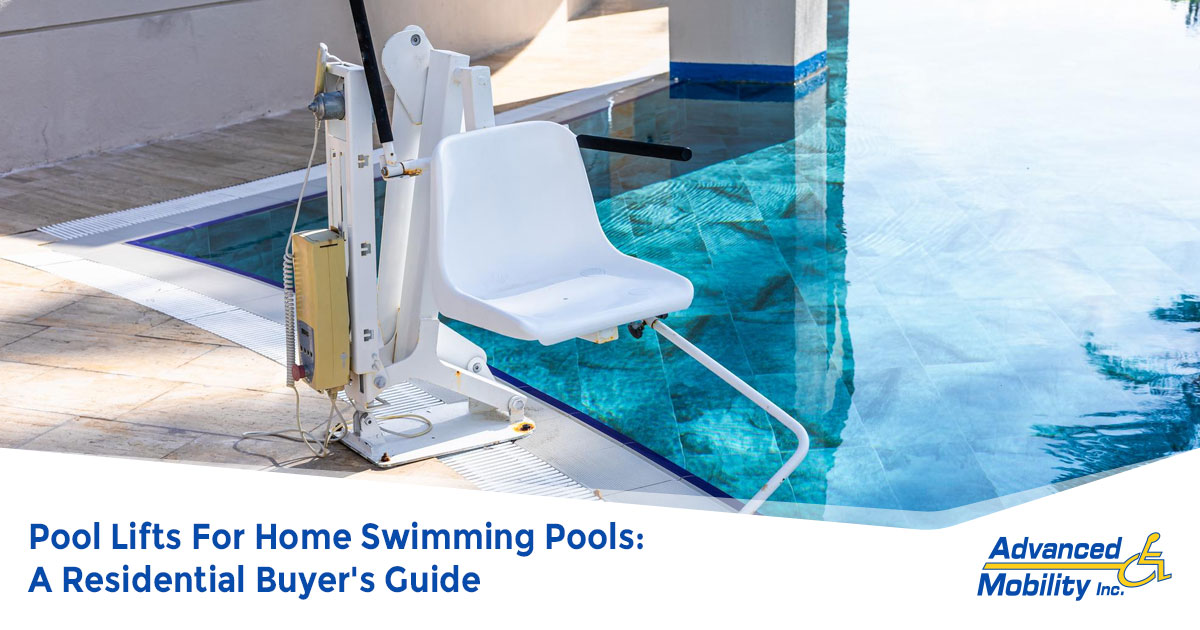
Getting into a pool on a summery day in Florida is a refreshing relief, yet those with mobility challenges often have to miss out. Getting in and out of the pool safely can seem like an insurmountable barrier to enjoying swimming. However, home pool lifts have solved the problem and made it possible for the whole family to benefit from being in the water.
If you’re thinking about investing in a pool lift, here are some practical tips to ensure you get the one most suited to your needs.

Should You Get A Portable Or Permanently Anchored Pool Lift?
The first question that most people ask about pool lifts is whether they should get a mobile one that can move around, or one that is installed permanently in place.
Consider questions such as:
How Much Exterior Space Do You Have?
If you have a narrow paved area around your pool, a permanent lift would be a better option. The anchor points are neat and compact, leaving enough space for a wheelchair to maneuver around the lift safely.
Portable lifts need a much broader surface area to accommodate a wide, heavy base and are well suited to pools with a substantial deck.
Will The Lift Be Used To Access Different Areas Of The Pool?
A permanent lift offers a fixed point of entry, while a portable lift enables users to get into the water from various points around the pool. This is especially helpful for those who are recovering from an injury and may have water therapy goals that change as they heal.
Shallow End Access
Shallow water entry is good for those who experience anxiety in the deep end. Lower water levels allow for supported weight-bearing exercise and balance practice.
Deep End Access
Deep water provides immediate buoyancy that removes stress from weak muscles and aching joints. The deep end is ideal for unrestricted movements and floating exercises.
Are Poolside Aesthetics Important?
Some portable pool lifts are bulkier than the permanent ones as they’re built to counterbalance the weight of the user without being anchored into the ground. Unlike permanent lifts, there is no damage to the deck.
Permanent lifts have a sleeker profile that creates less visual clutter. They offer a neat deck footprint that is visually appealing. Some types are available in a choice of colors to suit the outdoor color palette.
How Often Will The Lift Be Used?
For occasional use, a portable lift is versatile, easy to use, and quick to pack away. You will need a large, secure, undercover place to store it for protection from exposure to the elements. Some in-ground pool lifts, such as the Splash! Pool Lift series from S.R.Smith can be fitted like a fixed lift, but can be removed from the anchor sleeve for storage when not in use.
The beauty of a fixed in-ground lift is that it is always ready for use without needing to be set up. When it comes to therapeutic water exercise, having one less obstacle makes sticking to a recovery regimen easier.

What Does Home Pool Lift Installation Involve?
While each installation may vary slightly depending on the model of lift as well as the type of surface, a basic installation can be done in five steps:
#1: Pool Deck Check
Our technicians will start by assessing the pool surroundings. They’ll measure the area to determine where to position the lift so that it clears the edge of the pool safely. Technicians will check that the decking provides enough structural support, or whether they need to reinforce the area.
#2: Drilling And Anchoring
For in-ground pool lifts, they’ll drill a hole in the deck and use an anchor sleeve, or surface-mounted plates, that are concreted in place to hold the lift securely. Above-ground pools that don’t have a solid surrounding surface need a concrete pad as an attachment point for the lift.
#3: Curing
This step takes patience. Concrete needs 48 hours to set before bearing weight. After that, the lift can be fitted and can be used straight away. It will continue hardening to full strength in 28 days.
#4: Assembly And Mounting
The lift is assembled and either inserted into the anchor sleeve or the mounting plate is bolted to the deck or concrete pad.
#5: Power, Testing, and Operating Instructions
Whether powered by hydraulics, electricity, or batteries, the pool lift is connected to its source of power and safety-checked. You’ll be shown how to use it and given maintenance guidelines.
How Much Do Residential Pool Lifts Cost?
South Florida’s year long heat makes a home pool lift an essential tool for your loved one’s wellbeing. Prices are not only affected by the make and model, but also the complexity of installation. Thick decking means simpler, cheaper installation, whereas unsuitable pool surrounds need extra work to ensure safe use.
On average, you’ll be spending between $3,000 and $14,000 including installation. We carry a full range of pool lifts to suit all lifestyles and accessibility needs. Take advantage of our free consultations to talk through your options.
Home Pool Access: Questions To Ask Your Installer
We encourage you to make a list of things you want to know before discussing your options with us. Whatever questions or concerns you may have about home pool access, our team will guide you through.
Some of the questions we often get include:
- Is the remote waterproof?
- How long does the pool lift take from leaving the poolside to getting into the water?
- Can the user operate the pool lift by themselves, or is it a two-person job?
Find The Ideal Pool Lift For Your Home In Fort Lauderdale
Swimming is a joint-safe, comfortable way to exercise, but also gives families and friends an opportunity to enjoy spending time together. The right pool access device will fit into your budget, your space, and meet the needs of your loved one. We can help you find that sweet spot.
As a family business with over 20 years of experience in accessibility solutions, we’ll help you find the right pool lift to fit your pool. Call us now at 954-888-9292 to talk about your pool lift options.