


When a homeowner installs a residential elevator, they improve mobility, safety, and comfort throughout the home. The system allows smooth movement between floors without physical strain, makes it easier to transport groceries or laundry, and reduces the risk of falls on stairs. It operates quietly and efficiently, offering full accessibility for wheelchairs and multiple users.
What Is a Residential Elevator?
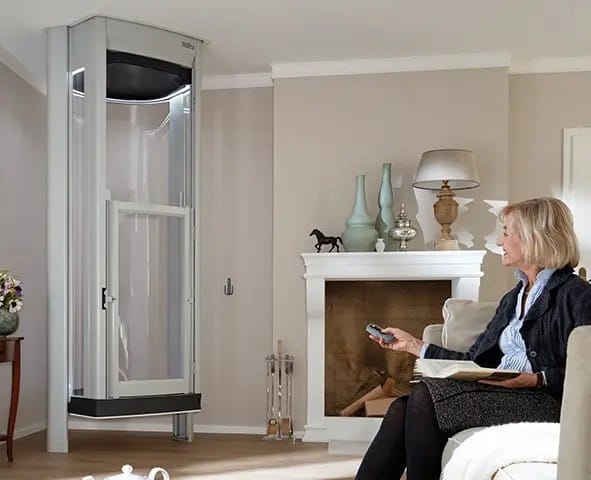
A residential elevator is a compact lift system that moves people and items vertically between floors inside a home. It operates using a motorized drive mechanism, which can be hydraulic, cable-driven, or gear less traction. The elevator travels within a small shaft or through a floor opening, stopping at designated landings like a standard commercial lift but on a smaller scale.
Modern home elevators are designed for convenience, safety, and style. They come with features such as automatic doors, smooth start-and-stop functions, and backup power for use during outages. Many models offer customizable interiors with glass panels, wood finishes, or LED lighting to blend seamlessly with the home’s design.

What Is a Stair Lift?
A stair lift is a motorized chair that moves along a rail attached to the staircase. It is designed to carry one person safely up or down the stairs while seated. The system includes a track, a powered carriage, and a foldable seat equipped with armrests, a safety belt, and footrests for stability and comfort.
Stair lifts are powered by electricity and include rechargeable batteries that allow them to function during power outages. They are controlled by simple buttons or remotes, giving users full independence without assistance.
The rail system can be installed on either side of the staircase and customized for straight, curved, or outdoor stairs. Straight stair lifts are the most common and cost-effective, while curved models are custom-built to follow unique stair designs.
Key Differences Between a Stair Lift and a Residential Elevator?
Both residential elevators and stair lifts make it easier to move between floors, but they do so in very different ways. Some key differences include:
1. Design and Function
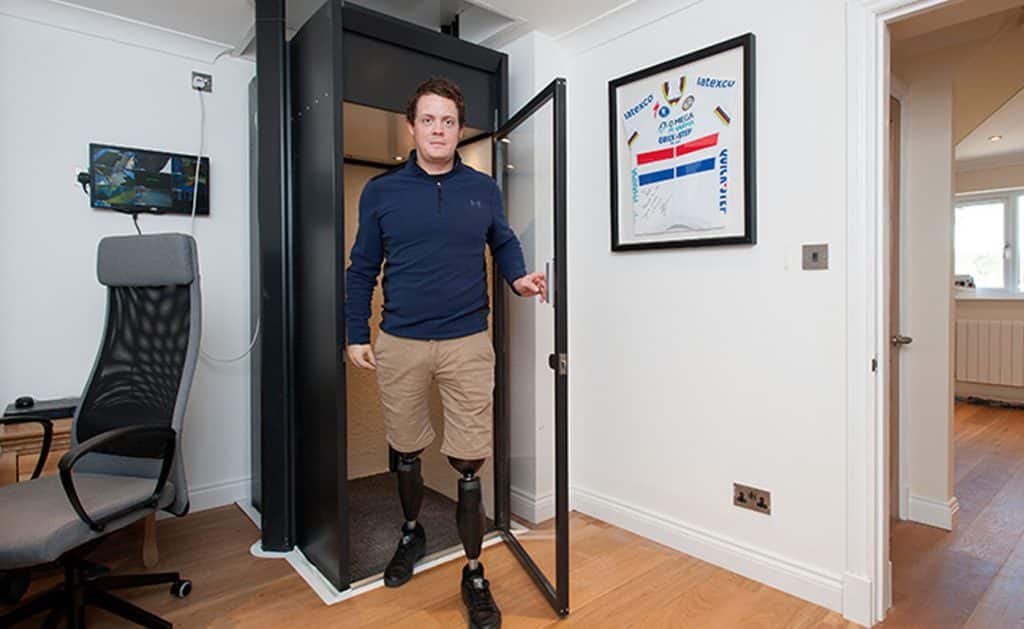
A residential elevator moves vertically through the home, carrying you, your wheelchair, or heavy items such as groceries and laundry. It offers a smooth and stable ride that feels like an extension of your living space.
A stair lift travels along the existing staircase on a rail and carries one person seated on a motorized chair. It provides a simple and practical solution for those who find stairs tiring but do not require full wheelchair access.
An elevator blends into the structure of the home, while a stair lift remains visible as a functional addition to the staircase.
2. Installation and Space Requirements
Installing an elevator involves planning and construction. It may require a small shaft, a through-floor opening, or a compact design that fits into existing space. The process takes time but creates a permanent solution for long-term accessibility.
A stair lift installs quickly and attaches directly to the staircase rather than the wall. Most models can be fitted in a few hours without major remodeling or building permits.
An elevator suits homeowners looking for a built-in, lasting upgrade. A stair lift is ideal for those who want a fast and flexible installation.
3. Cost and Maintenance
A residential elevator costs more to install but increases home value and provides long-term convenience. Maintenance usually involves a professional inspection once or twice a year to keep it operating smoothly and safely.
A stair lift costs less and needs very little upkeep. Simple tasks such as cleaning the rail or replacing a battery keep it reliable.
The elevator is an investment in independence and comfort over time. The stair lift is a budget-friendly option for immediate mobility support.
4. Safety and Comfort
A residential elevator provides a safe, enclosed ride that requires no physical effort. You can stand, sit, or roll in with a wheelchair and travel between floors with the press of a button. Emergency brakes, sensors, and backup power add extra protection.
A stair lift requires you to transfer onto a seat and fasten a belt before use. It is safe for those who can sit comfortably and balance while getting on and off the chair.
The elevator supports full accessibility for users with limited mobility. The stair lift suits people who need moderate assistance with stairs.
5. Home Value and Visual Appeal
A stair lift focuses on practicality rather than style. It delivers safety and reliability but can affect the visual openness of a staircase. When no longer needed, it can be removed easily without permanent changes to the home.
A residential elevator improves both the function and appearance of a home. It can be designed with glass panels, polished finishes, or custom colors that complement the interior. This modern feature often increases property value and enhances overall design.
The elevator enhances value and aesthetics. The stair lift prioritizes quick access and everyday convenience.
Which Option Is Right for You?
Several factors determine whether a residential elevator or an access stair lift best suits your home and lifestyle. Consider the following before making your choice.
- Evaluate how many floors you need to access and how often you’ll use the system.
- Assess your current and future mobility needs to choose a long-term solution.
- Review your available floor space to determine whether an elevator can fit comfortably.
- Consider your home’s structure and whether it can accommodate minor or major modifications.
- Think about how long you plan to stay in the home before investing in a permanent system.
Safety Features and Considerations
Both residential elevators and stair lifts are designed with safety as a top priority, but the type and level of protection they offer can vary significantly. Home elevators often come equipped with advanced systems like automatic braking, emergency stop buttons, interlocking doors, and backup power systems to ensure operation even during power outages.
These features make elevators suitable for households with multiple users, including those with wheelchairs or mobility aids, as they offer stable, enclosed transportation between floors.
Key Safety Features:
- Automatic emergency brakes and stop functions
- Door interlocks on elevators to prevent unsafe entry
- Obstruction and motion sensors on stair lift
- Seat belts and swivel seats for secure transfer
- Battery backup systems for power outage
- Smooth acceleration and deceleration control
- Manual lowering or override features in emergencies
Contact Advanced Mobility, Inc. for Installation of Residential Elevators
If you’re ready to make your home safer and easier to navigate, Advanced Mobility, Inc. can help you choose the right solution. Whether you need the long-term comfort of a residential elevator or the quick convenience of a stair lift, our specialists provide expert advice, professional installation, and dependable aftercare service.
Advanced Mobility serves homeowners across South Florida with high-quality mobility products built for safety, reliability, and modern living. Every installation begins with a free in-home assessment, so you can understand your options and see what fits your home best. Schedule your consultation with Advanced Mobility, Inc. today for innovative home accessibility solutions.